
When to Refinish Cabinets and When to Replace Them
Start by distinguishing a surface problem from a construction or layout problem. Refinishing and replacement have different purposes, and neither should be selected from photographs without assessing the existing cabinetry.
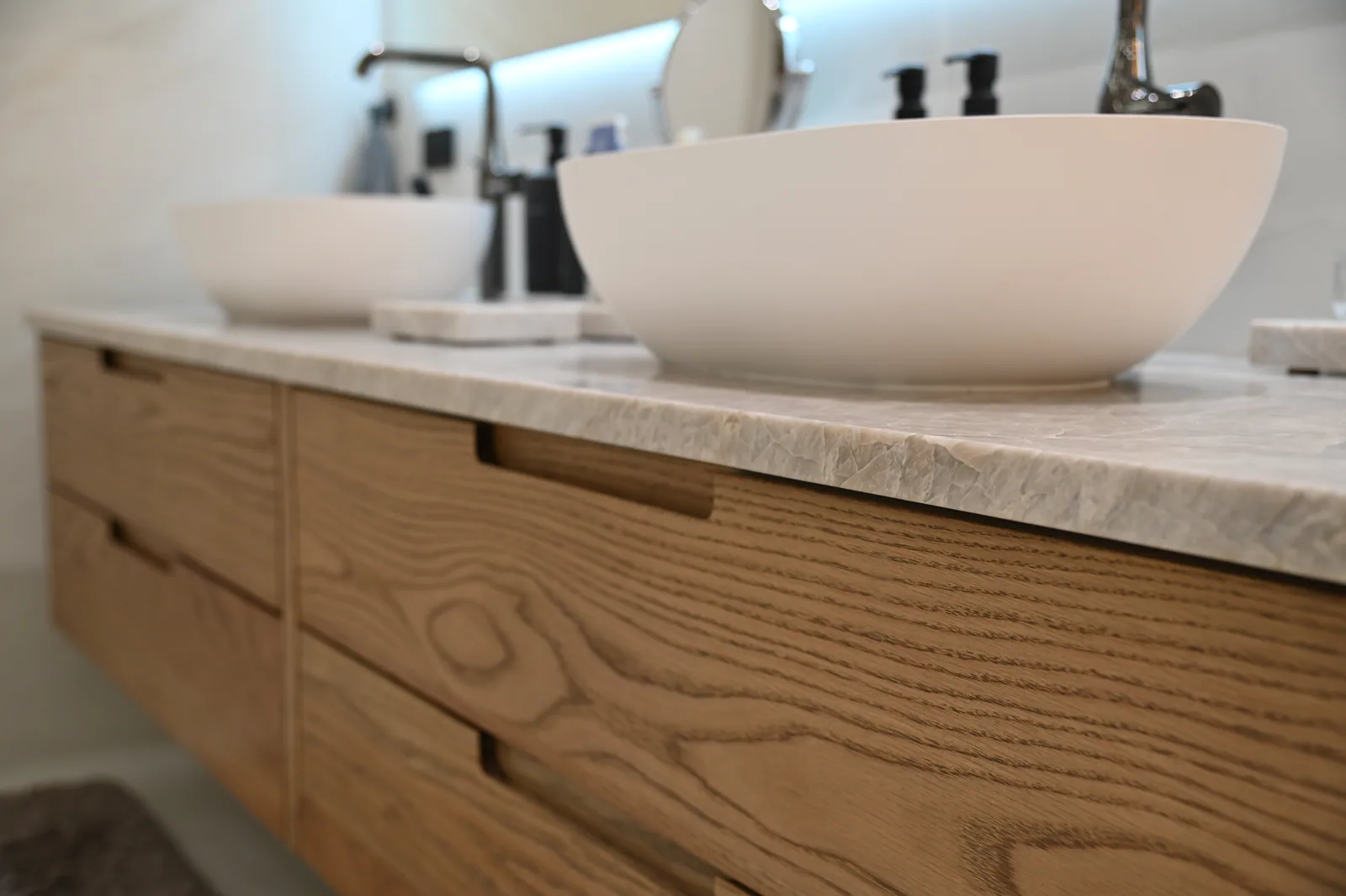
Establish the condition and specification
Identify the current finish, front construction and cabinet condition where records are available. Note visible wear, damage and operational problems separately. Ask a qualified provider to assess whether the desired treatment is compatible with the existing surfaces. Do not assume that every painted, laminated or wood-looking front can be refinished in the same way. Hidden issues and previous treatments may affect the options. LeVika should also confirm whether the requested service is within its actual offering.
Review the functional changes you need
If the main issue is storage, appliance arrangement or circulation, a surface treatment may leave those problems unchanged. List which cabinets and interiors would need alteration to achieve the desired room. Compare that scope with replacement using consistent assumptions about counters, appliances and adjacent work. A new appearance can be worthwhile, but it should not be presented as a solution to a layout problem it does not address.
Compare the resulting room
Ask each proposal to describe retained components, changed surfaces, preparation, hardware and remaining limitations. Discuss site sequencing and service expectations without assuming one approach is always cheaper or simpler. Request samples or documented finish information for the proposed result. Choose against your actual priorities and the assessed condition, not a general rule based on age alone. The useful outcome is a clearly scoped plan explaining what will improve, what remains and who is responsible for each part of the work.
Your next useful steps.
Three questions to bring.
- Is the problem the surface, the construction or the way the room works?
- Can the existing finish take the proposed treatment?
- What limitations would remain after refinishing?
Comparison guidance. Ask LeVika whether a specific service, such as refinishing, is part of its current offer.