
Do not trust a promise you cannot examine.
A high-value cabinetry decision should be supported by completed work, visible responsibilities, clear approvals and project-specific written terms.
 LEVIKA / CUSTOM CABINETRY
Look for evidence that answers a project risk.
A gallery is strongest when it is connected to process, material decisions and the scope you are considering.
Completed work
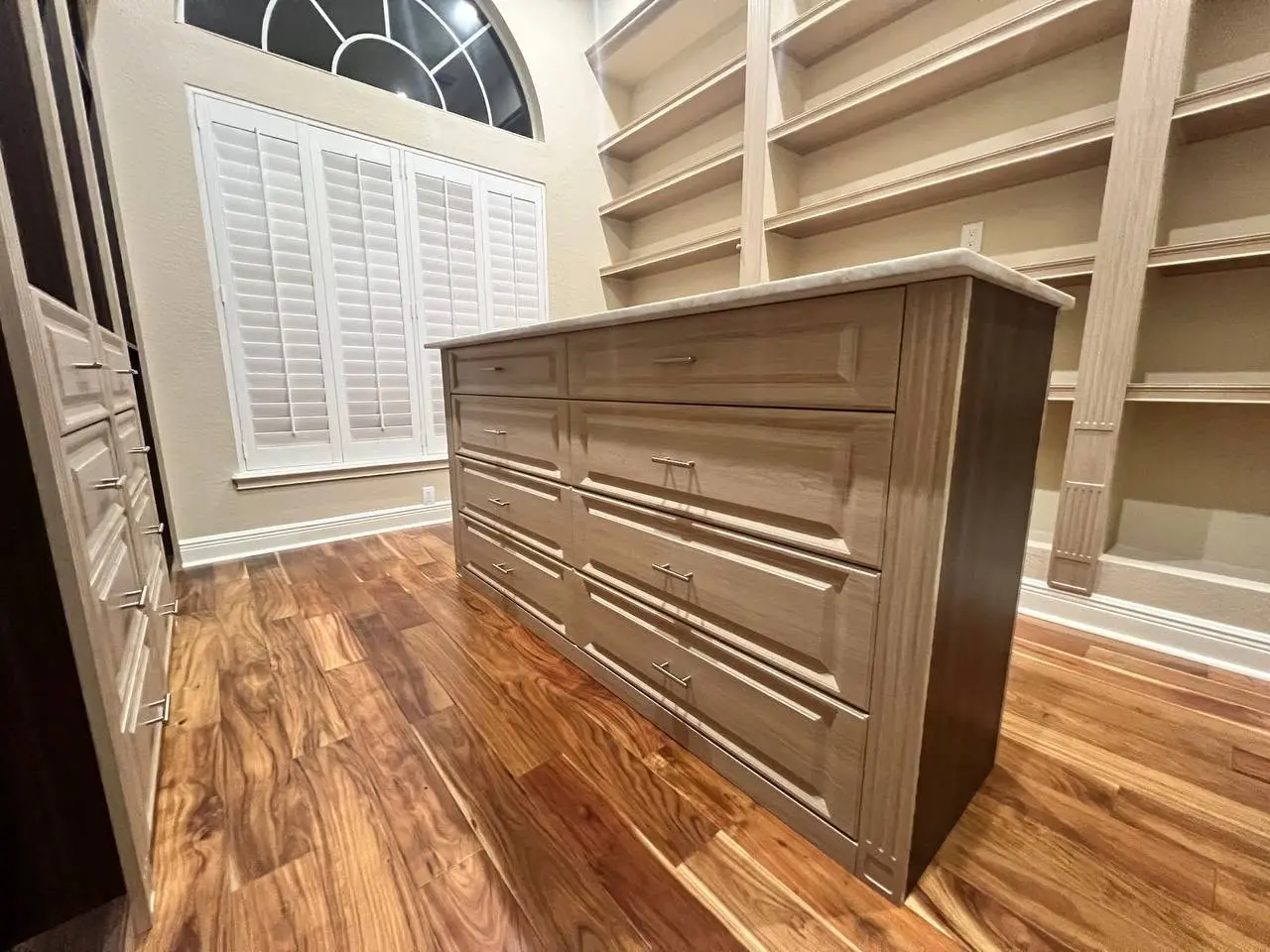
Review real kitchens, closets, media walls, bars, wardrobes and office cabinetry at room scale.
See projects 02Visible process
Understand what happens before design, production and installation—and what each stage needs from you.
Review the process 03Material thinking
See how appearance, construction, room conditions and care are considered as one system.
Compare materials 04Public presence
Cross-check current contact information and independently hosted company profiles.
Open HouzzAsk questions that expose responsibility.
The answer should appear in the project documents—not depend on what either side remembers from a call.
Who verifies final dimensions before production?
Which drawings, finishes and samples will I approve?
What is included—and what belongs to another trade?
How are revisions and changes documented?
What must be ready before delivery and installation?
Which warranty and service terms appear in the written agreement?
A stronger decision has four layers of proof.
The room problem is understood before product selection.
The proposed solution is visible in 3D or drawings.
Materials and scope are approved in context.
Installation follows the accepted project information.
Bring a real room into the conversation.
The most useful next step is a project-specific review of location, scope, timing, investment and available plans.