
Are Soft-Close Hinges and Drawer Slides Worth It?
Soft closing is a motion feature, not a complete description of hardware quality. Evaluate the whole hinge or drawer system, its intended load and how the cabinet will be used.
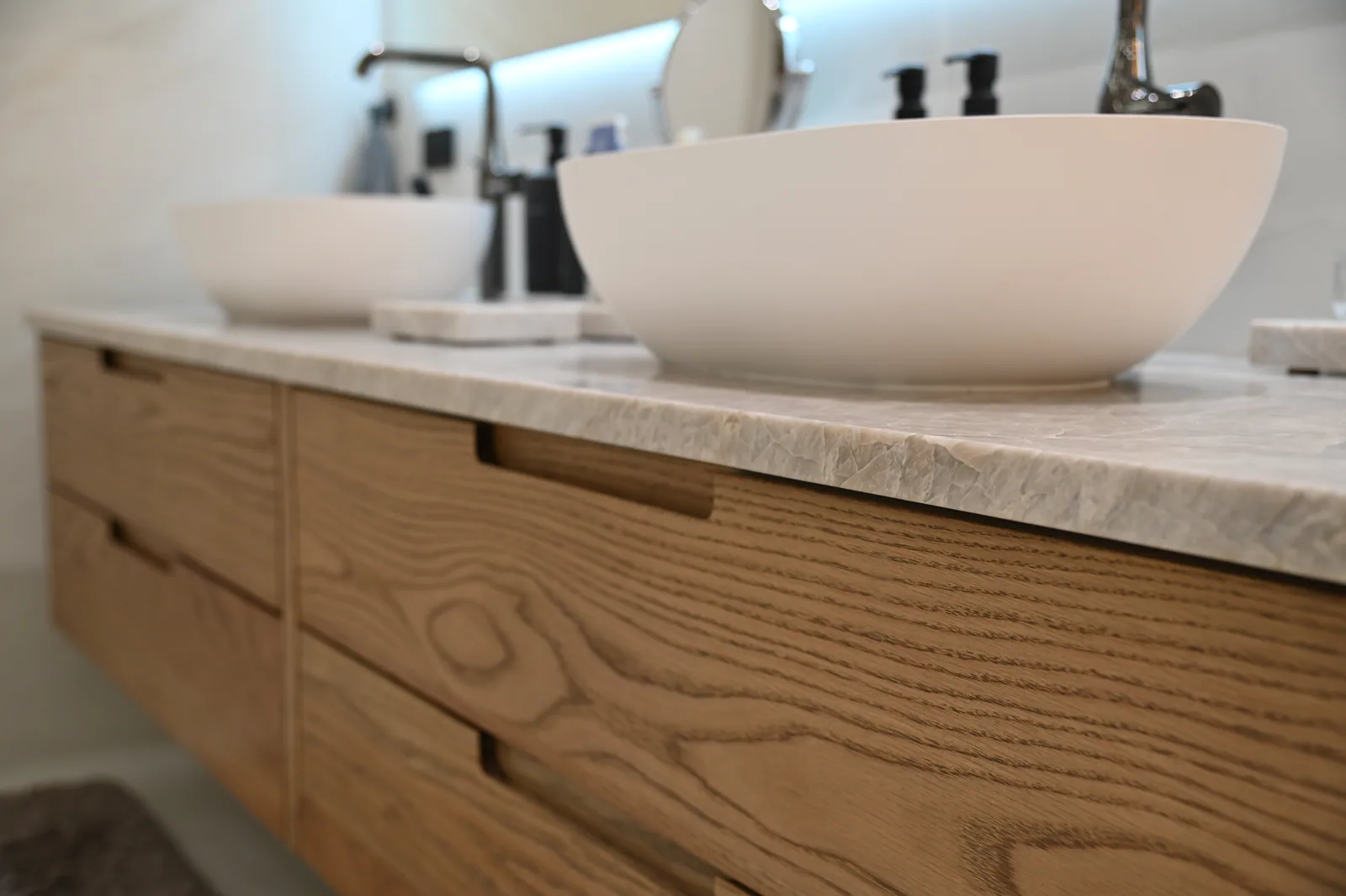
Test everyday operation
Open and close a representative door or drawer with typical contents where possible. Notice access, extension, resistance and the final closing action. Ask whether the feature is included on every relevant cabinet or only selected units. A demonstration on a small empty drawer does not settle the behavior of a different size and load. Identify the exact hardware family in the proposal so the expected function can be checked against the manufacturer's information.
Compare more than the closing sound
Review the available opening angle for hinges and the useful extension for drawers. Ask about adjustments, service access and compatibility with the proposed fronts. Blum, for example, offers runner configurations with different lengths and extension options; specifying a brand alone does not choose the configuration. Determine which differences matter for your storage. A smooth closing action does not compensate for a drawer that cannot reveal the items at its rear or conflicts with an adjacent appliance.
Prioritize where it helps
Consider frequently used drawers, larger fronts and the routines of the household when comparing alternatives. Ask for the price and specification effect rather than assuming the upgrade has the same value everywhere. Keep the hardware documentation with the project record and follow its maintenance instructions. Do not apply improvised lubricants or attempt adjustments solely because another online cabinet looks similar. The value lies in an appropriate, serviceable system that improves ordinary use, not in a feature label detached from the rest of the design.
Your next useful steps.
Three questions to bring.
- Which hardware family and configuration is proposed for each cabinet?
- How far do the drawers extend, and how wide do the doors open?
- How are hinges and runners adjusted or serviced later?
Hardware guidance. Loads, extension and adjustment follow the selected manufacturer's documentation, such as the linked Blum overview.