
Plywood vs. MDF Cabinet Boxes and Doors Explained
Do not choose a complete kitchen from one material name. Cabinet boxes, fronts, exposed panels and interior fittings have different jobs, and the proposal should identify the construction of each.
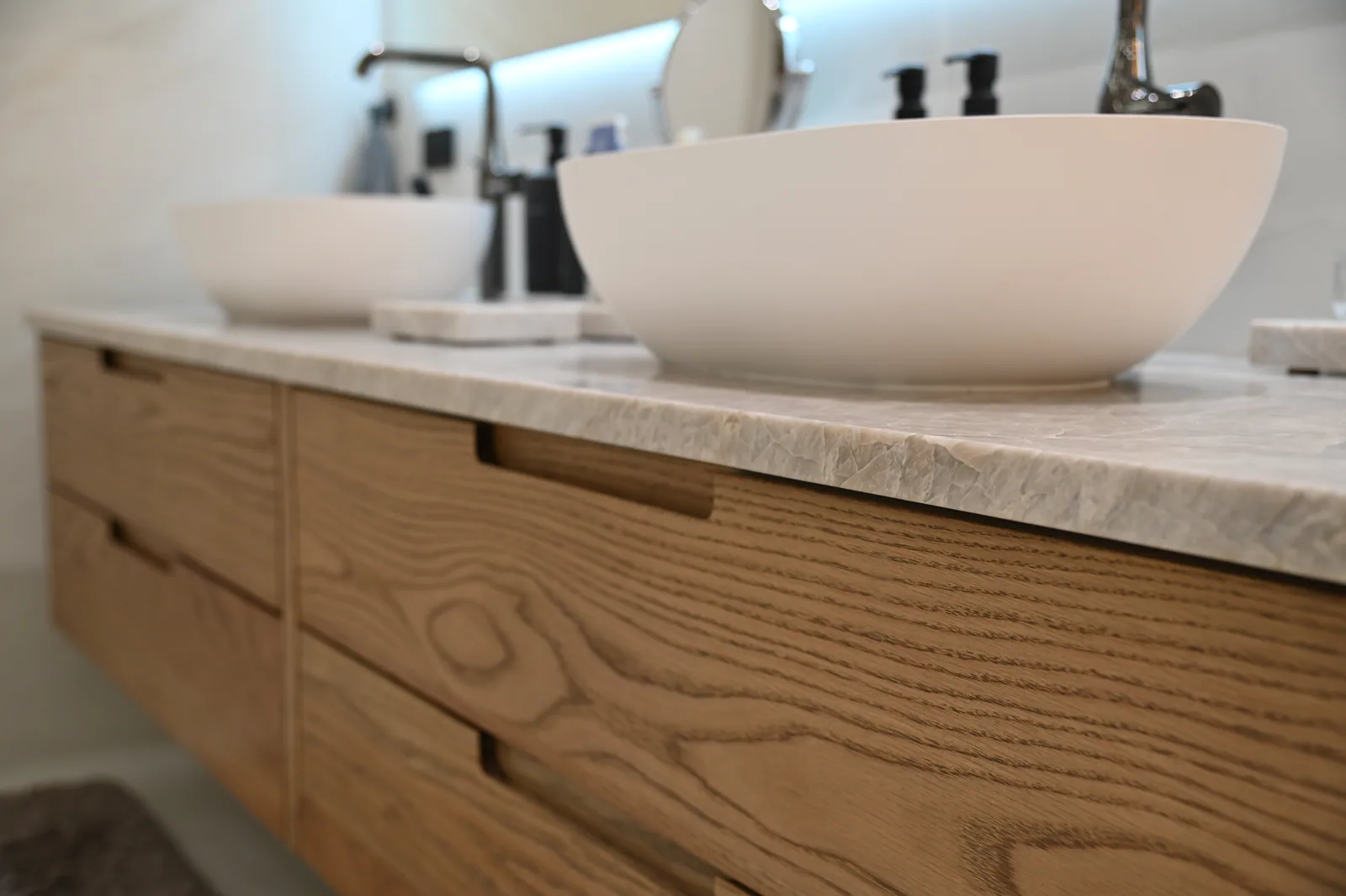
Ask what the label describes
A reference to plywood boxes does not tell you what the doors or finished end panels are made from. Similarly, an MDF door specification does not describe the cabinet's entire assembly. Request a component-by-component description, including thickness, exposed surfaces, edges and finish. Ask why the proposed construction suits the intended room and design. This is more informative than ranking broad material families without knowing how they are used in the actual cabinet.
Review the finished system
Look at a representative sample or detail showing the face, edge and junctions. Consider the appearance required: visible grain, a painted profile or another surface treatment. Ask how hardware is attached and what the supplier specifies for the chosen assembly. Discuss wet areas and likely exposure without assuming that either material label means waterproof. LeVika should confirm the proposed system in the project documents; a photograph cannot identify concealed substrates or certify their performance.
Compare equivalent proposals
Put the component schedules side by side and mark any unspecified items. Compare the intended use, finish quality, edge treatment and hardware along with the material name. If an alternative is proposed to adjust cost or availability, ask whether the front profile, weight, appearance or care instructions change. Approve the resulting specification rather than a substitution described only as equivalent. The decision should explain why each part of the cabinet is appropriate for its role, not merely repeat a familiar marketing phrase.
Your next useful steps.
Three questions to bring.
- What are the boxes, doors, drawer fronts and exposed ends each made of?
- How are the edges finished, and how is the hardware fixed?
- If a substitute is offered, what changes in look, weight or care?
Materials guidance. Concealed construction cannot be identified from a photograph; the proposal's component schedule and a physical sample show what is supplied.