
Painted vs. Stained Cabinets: Which Finish Is Right for You?
Painted and wood-revealing finishes create different visual effects, but the right choice is more specific than ‘modern’ versus ‘traditional.’ Start with how much grain, variation and contrast you want to see in the actual room.
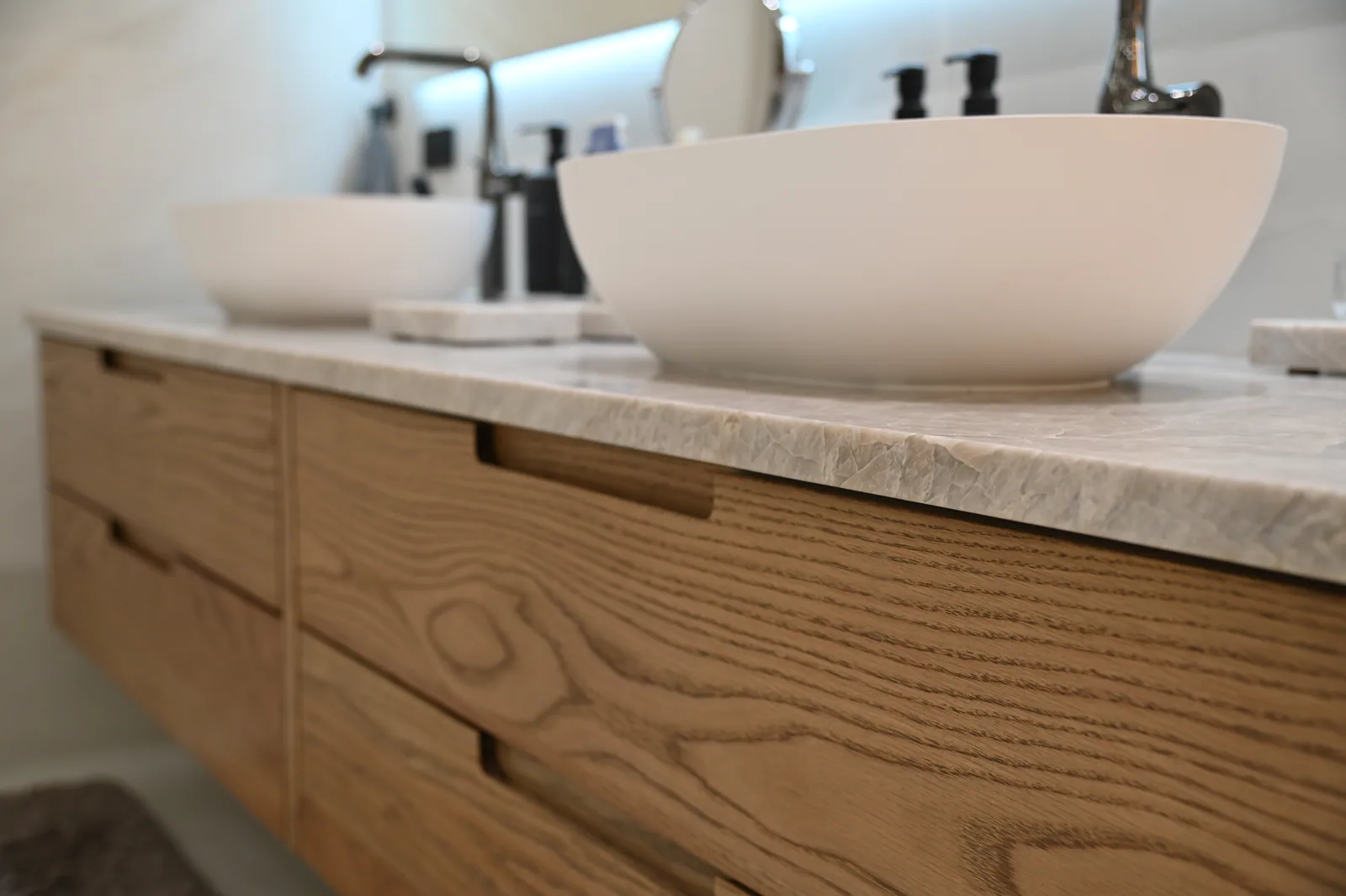
Decide whether grain is part of the design
An opaque painted direction emphasizes the outline of a door and the rhythm of the cabinet wall. A wood-revealing direction makes grain and natural variation part of the composition. Look at the vanity shown here: broad drawer fronts give the grain room to be seen. A similar arrangement in an opaque finish would read differently. Neither is inherently more luxurious. Choose which quality should draw attention and which parts of the room should remain visually quiet.
Do not confuse appearance with construction
A photograph cannot reliably identify a wood species, veneer thickness, substrate or coating. Even a convincing wood appearance may come from a different surface system than you expect. Ask the proposal to identify the front construction, the visible face, edge treatment and approved finish. If you are comparing options, keep the cabinet design and hardware assumptions the same. Otherwise, the discussion mixes changes in appearance with changes in construction and cannot explain the difference clearly.
Review the sample where it will be used
Place a physical sample beside your flooring, counter and wall finish. Look at it in daylight and with the evening lights on, from the main viewing direction and at an angle. For a wood direction, ask how variation and grain alignment will be handled across adjacent fronts. For an opaque direction, check the relationship between large surfaces rather than approving a small swatch alone. Record the accepted sample and any agreed variation in the project documents.
Ask about everyday use before approving
Explain where hands, splashes, sunlight and small appliances will meet the cabinetry. Request care instructions for the actual selected system, not generic advice for all cabinets. Confirm what happens if a front needs service and how a replacement will be matched to the installed work. Product-specific maintenance guidance matters: for example, the linked Wilsonart document applies to its laminate surfaces, not automatically to paint or wood. Material selection should stay tied to the written specification.
Your next useful steps.
Three questions to bring.
- Is the pictured wood appearance the specified material?
- How will adjacent fronts be matched?
- What care instructions apply to this finish?
The photographed LeVika vanity establishes visible grain and proportions only. Material identity comes from the project specification and approved sample.