
Best Cabinet Materials for Florida Humidity
There is no single material label that resolves every humidity-related concern. Begin with the actual room conditions and ask the supplier to specify a complete cabinet assembly suited to them.
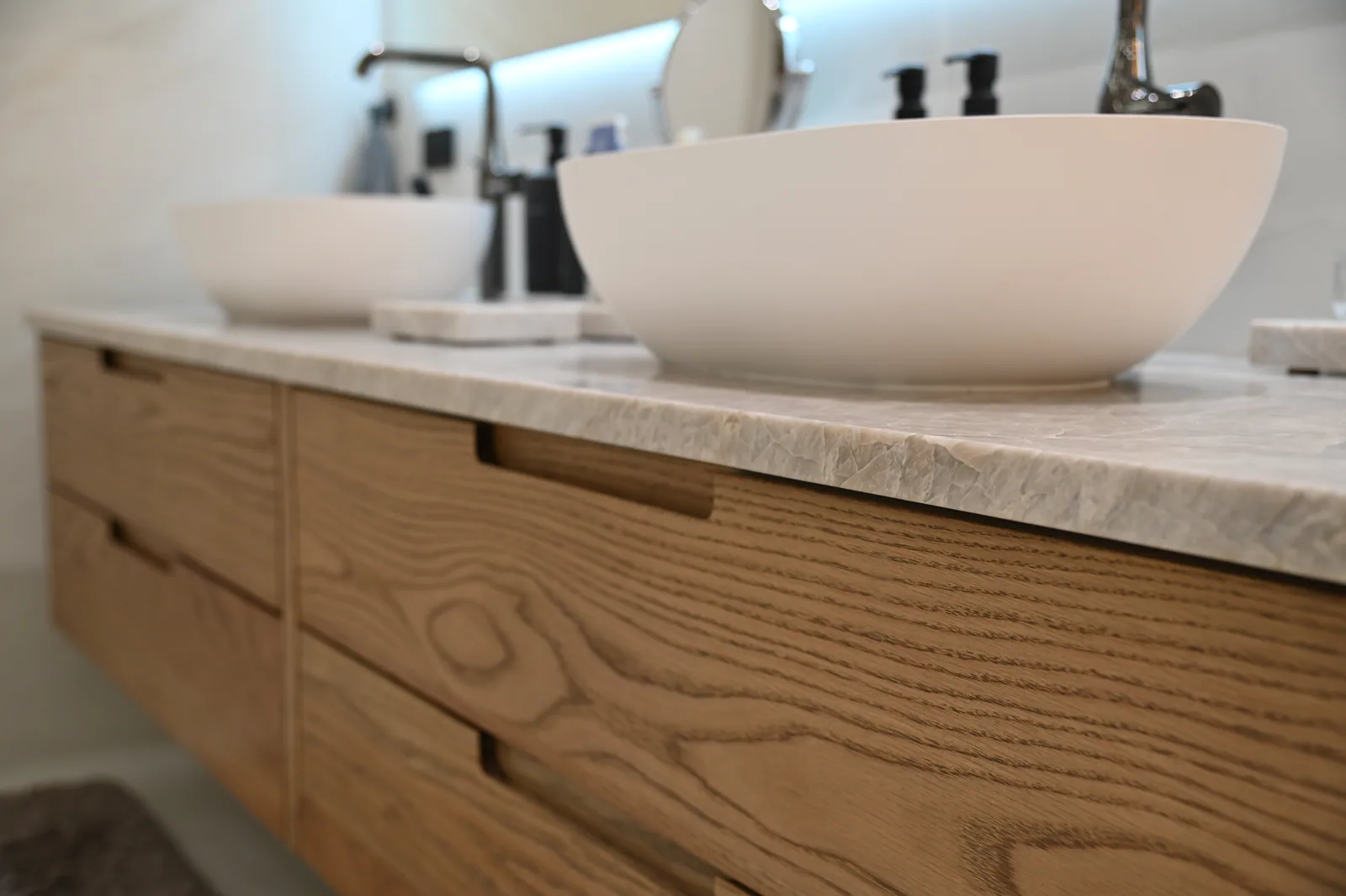
Describe the exposure accurately
Distinguish an occupied, conditioned kitchen from a space with changing conditions or a history of leaks. Note sinks, dishwashers, exterior openings and equipment that concentrates heat or moisture. Share known problems rather than expecting a new finish to conceal them. The responsible professionals should address building or appliance issues before cabinetry is installed. Environmental limits come from the selected products, the project requirements and the people assessing the property.
Review edges and interfaces
Ask how the proposed assembly handles exposed ends, edges, cutouts and areas near plumbing. The finish on the broad face is only one part of the system. Request care and installation guidance for the exact construction and surface treatment. Avoid assuming that a cabinet is waterproof because it is intended for a kitchen or bathroom. A physical sample can establish appearance, but hidden construction and installation details need to be documented separately.
Keep prevention and service practical
Plan access to plumbing and appliance connections so problems can be noticed and addressed. Ask how to report swelling, discoloration or changed door alignment if it occurs. Keep the material schedule and care instructions with the project files. When comparing alternatives, discuss the expected room conditions, maintenance and availability rather than accepting a universal claim about the best board or finish. A well-specified solution combines appropriate components with a prepared site and a clear response when conditions change.
Your next useful steps.
Three questions to bring.
- Where does our kitchen get moisture or heat: sink, dishwasher, exterior door?
- How are exposed ends, edges and cutouts near water protected?
- How do we report swelling or a door that moves out of line?
Climate guidance for Central Florida homes. Environmental limits come from the selected products and the people assessing the property; this guide does not set them.