
Built-In Storage Ideas for Entryways and Mudrooms
Entry storage should intercept the things that arrive with people before they spread through the home. Start with the actual route from the door and the objects used every day.
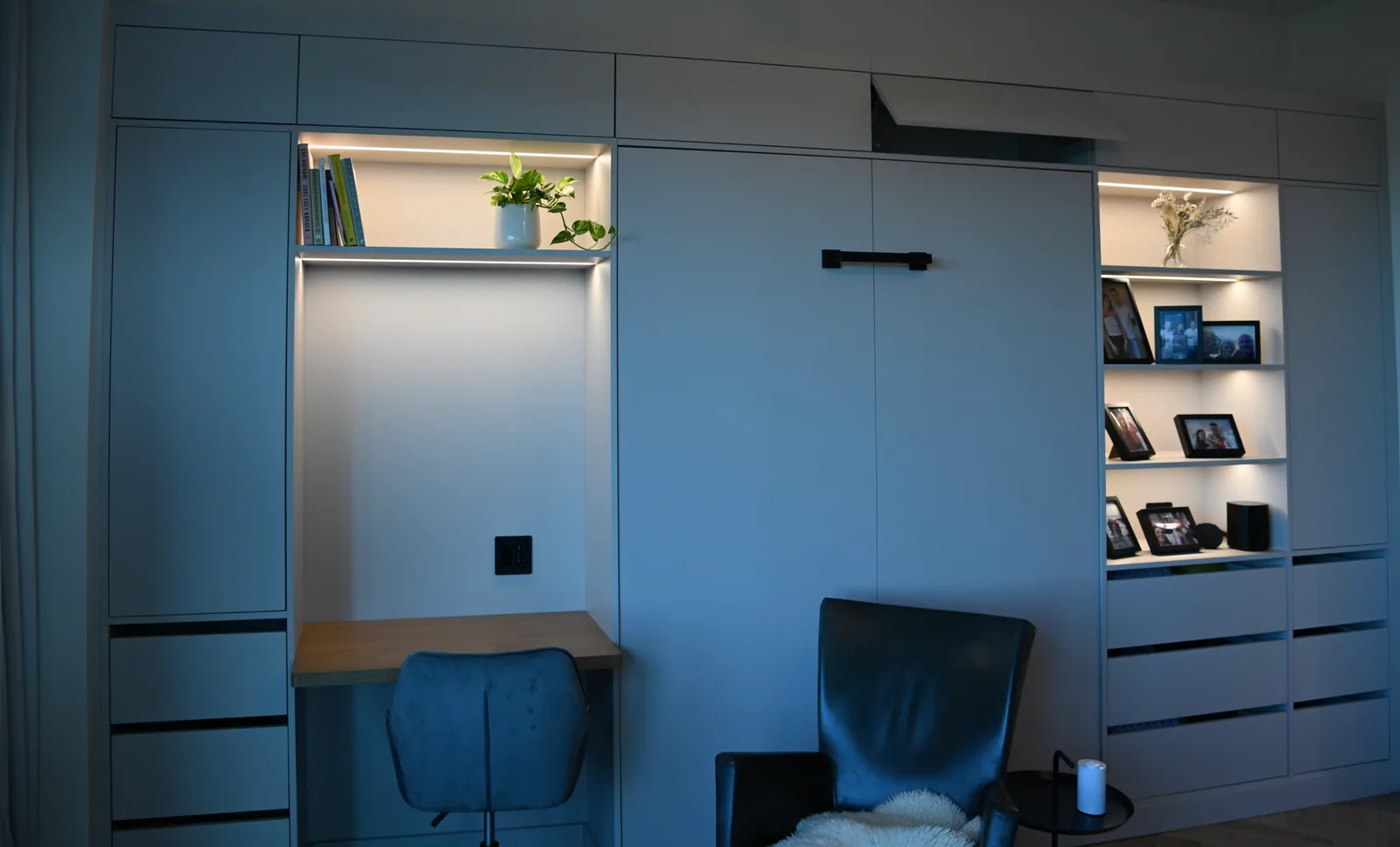
Follow the arrival routine
List bags, shoes, outerwear, keys and other items that need a predictable place. Separate belongings used daily from seasonal storage. Identify which person uses each area and whether the space serves more than one entrance. A row of identical compartments may look balanced but fit the household poorly if the objects differ greatly in size. Measure the awkward items and decide where wet or dirty belongings should be handled without assuming cabinetry can replace appropriate room preparation.
Protect movement through the entrance
Draw the door opening, circulation route and any seating or storage in use. Check that drawers, hooks and projecting handles do not create awkward contacts. If a bench is included, confirm its construction and intended use with the supplier. Consider what visitors see from the entrance and what remains visible from adjoining rooms. The aim is to make arrival easier without turning a passage into an obstacle course of attractive but poorly placed storage.
Make the organization sustainable
Combine open access for frequently handled items with closed storage where clutter should be contained. Ask how surfaces and interiors should be cleaned for the selected finish. Include outlets or lighting only with the appropriate coordination and service access. Record the useful compartment sizes in the approval documents. A built-in entry works when the household can maintain its organization with ordinary habits, not when it depends on every person arranging belongings exactly as they appear in an inspiration photograph.
Your next useful steps.
Three questions to bring.
- What does each person drop at the door every day?
- Can the door open, and people pass, while someone sits on the bench?
- Where do wet or dirty things go?
Storage guidance. Benches, outlets and lighting are confirmed with the supplier and the responsible trades as part of the approved design.