
How to Make a White Kitchen Feel Warm, Not Sterile
Warmth comes from relationships between surfaces, light and everyday objects. A white kitchen does not need many additional colors if the main materials and proportions are carefully coordinated.
Compare whites together
Place the cabinet sample beside the planned counter, wall finish and flooring. Look at the combination in the room's daylight and evening lighting. Surfaces that appear similar on separate screens can reveal different undertones when placed together. Decide which plane should feel quieter and which should carry more texture. Do not approve the cabinet white in isolation and assume the remaining materials will automatically coordinate with it later.
Add texture with a purpose
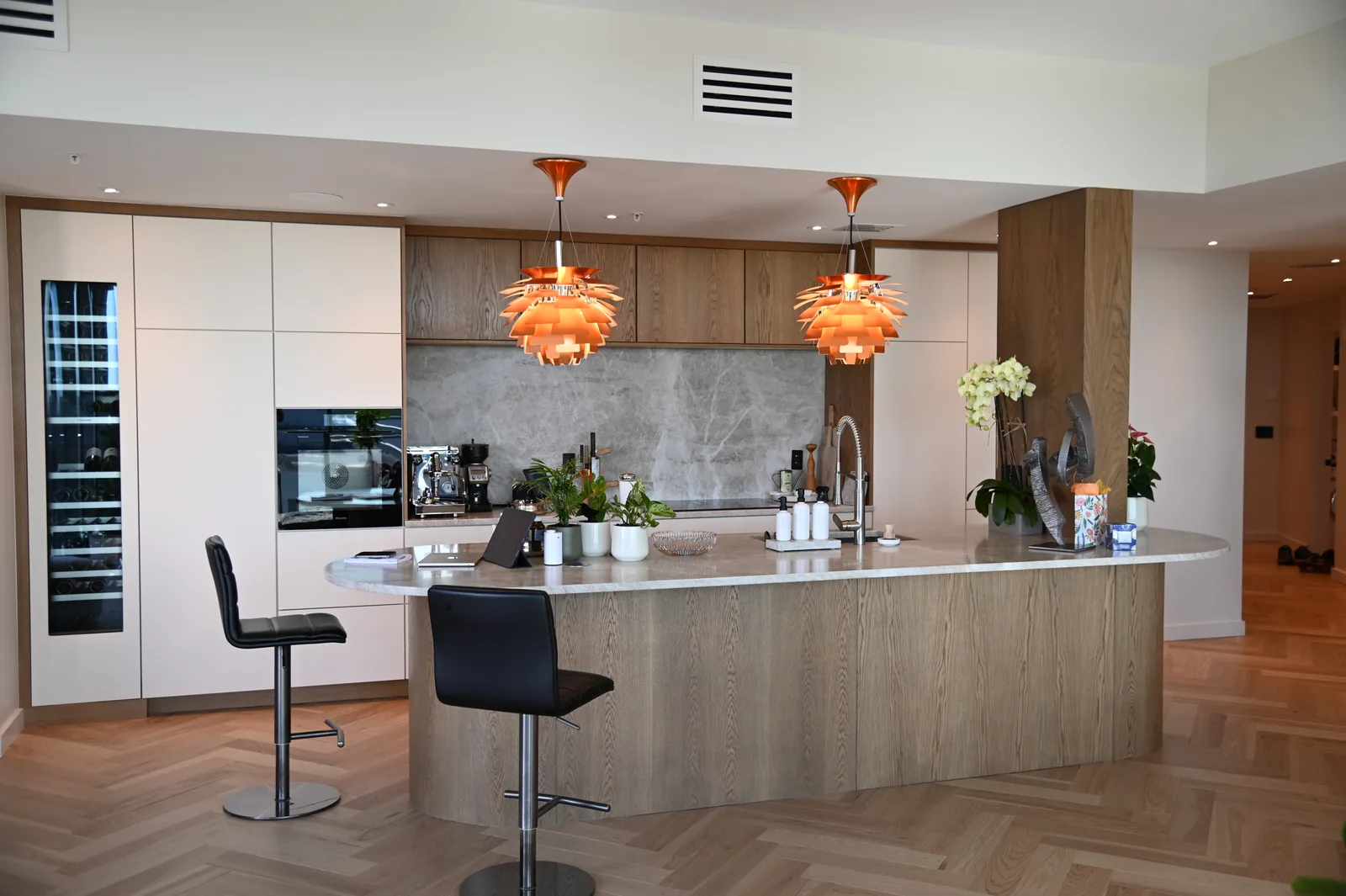
Wood, visible grain or a carefully chosen textured surface can provide contrast without making the composition busy. The supplied LeVika kitchen photographs show lighter planes beside wood-toned elements. Use those examples to discuss the amount and position of contrast, not to infer an exact product specification. An island or selected wall can carry warmth while the rest of the cabinetry remains calmer. Review how grain direction and exposed ends affect the whole arrangement.
Include the real lighting and routine
Consider where task light is needed and which surfaces reflect it into the room. Coordinate fixtures and controls with the responsible professional; a rendering's glow is not a lighting specification. Add the objects that normally remain visible, such as a coffee setup or frequently used serving pieces, when judging the design. The aim is a welcoming room that still feels coherent during ordinary use. Confirm samples together before manufacturing, because a screen cannot guarantee the final relationship between white, wood and light.
Your next useful steps.
Three questions to bring.
- Do our white cabinet, counter and wall samples share the same undertone?
- Which surface carries the warmth: the island, a wall or the shelving?
- Where is task light needed, and who is designing it?
Design guidance illustrated by the supplied wood-and-white LeVika kitchen. Tones are approved with physical samples in the room, not on screen.