Painted vs. Stained Cabinets: Which Finish Is Right for You?
Painted and wood-revealing finishes create different visual effects, but the right choice is more specific than ‘modern’ versus ‘traditional.’ Start with how much grain, variation and contrast you want to see in the actual room.
Do not choose a complete kitchen from one material name. Cabinet boxes, fronts, exposed panels and interior fittings have different jobs, and the proposal should identify the construction of each.
Choose a countertop with the cabinetry and the responsible fabricator, not as an isolated color sample. Compare appearance, care, edge details and the actual installation requirements of the selected product.
Door profiles affect the rhythm of a kitchen at both room scale and close range. Compare them on a representative cabinet arrangement rather than judging a small sample without its surrounding lines.
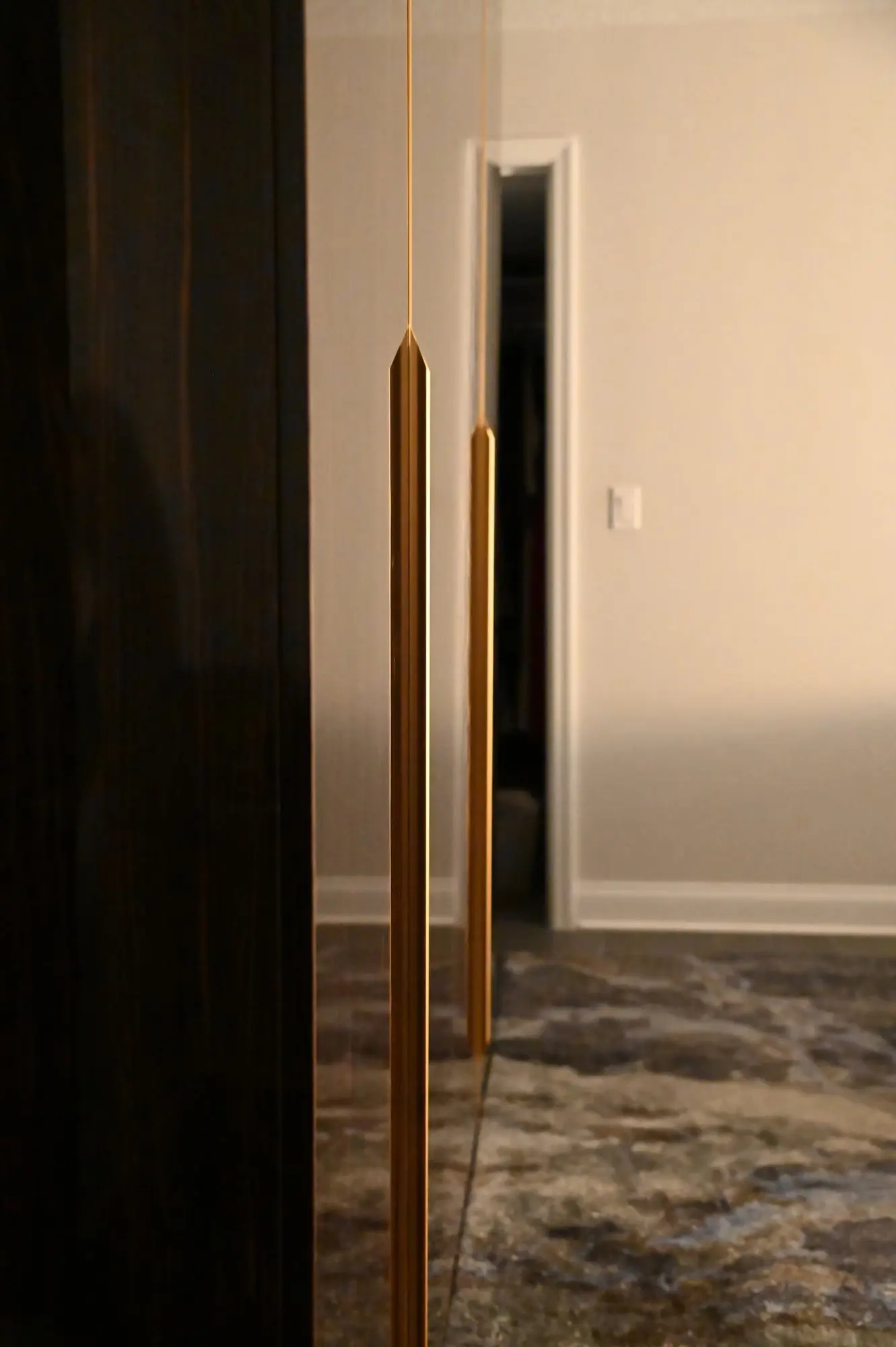
Choose hardware as something you will touch and see repeatedly. Finish color matters, but shape, grip, position and the relationship to nearby fixtures are equally important.
Soft closing is a motion feature, not a complete description of hardware quality. Evaluate the whole hinge or drawer system, its intended load and how the cabinet will be used.
There is no single material label that resolves every humidity-related concern. Begin with the actual room conditions and ask the supplier to specify a complete cabinet assembly suited to them.
Warmth comes from relationships between surfaces, light and everyday objects. A white kitchen does not need many additional colors if the main materials and proportions are carefully coordinated.
Two-tone cabinetry works best when the change in finish explains the room. Decide whether contrast separates the island, a tall storage zone or a particular architectural feature before selecting colors.
Low maintenance should mean a routine you understand and can follow. It does not mean a surface can ignore spills, heat, impact or the manufacturer's cleaning instructions.
Materials, Finishes & Hardware / next step
Carry the answer into the relevant project path.
Choose complete finish and hardware systems for the room conditions—not isolated samples.